 English
 ខ្មែរ
ខ្មែរ
Infrastructure investment and development: policies centered on cars are wasteful government budgetary expending
 All residents, including those with mental and physical disabilities, women, people of different socioeconomic backgrounds, and the elderly, must have access to ecologically friendly transportation. There aren't enough transit options for everyone in Cambodia these days. This is a result of Cambodia's heavy reliance on private automobile use for transportation. The development of roads and bridges for private automobiles has historically accounted for the majority of domestic infrastructure investment; alternative, more ecologically friendly modes of transportation have received less attention.
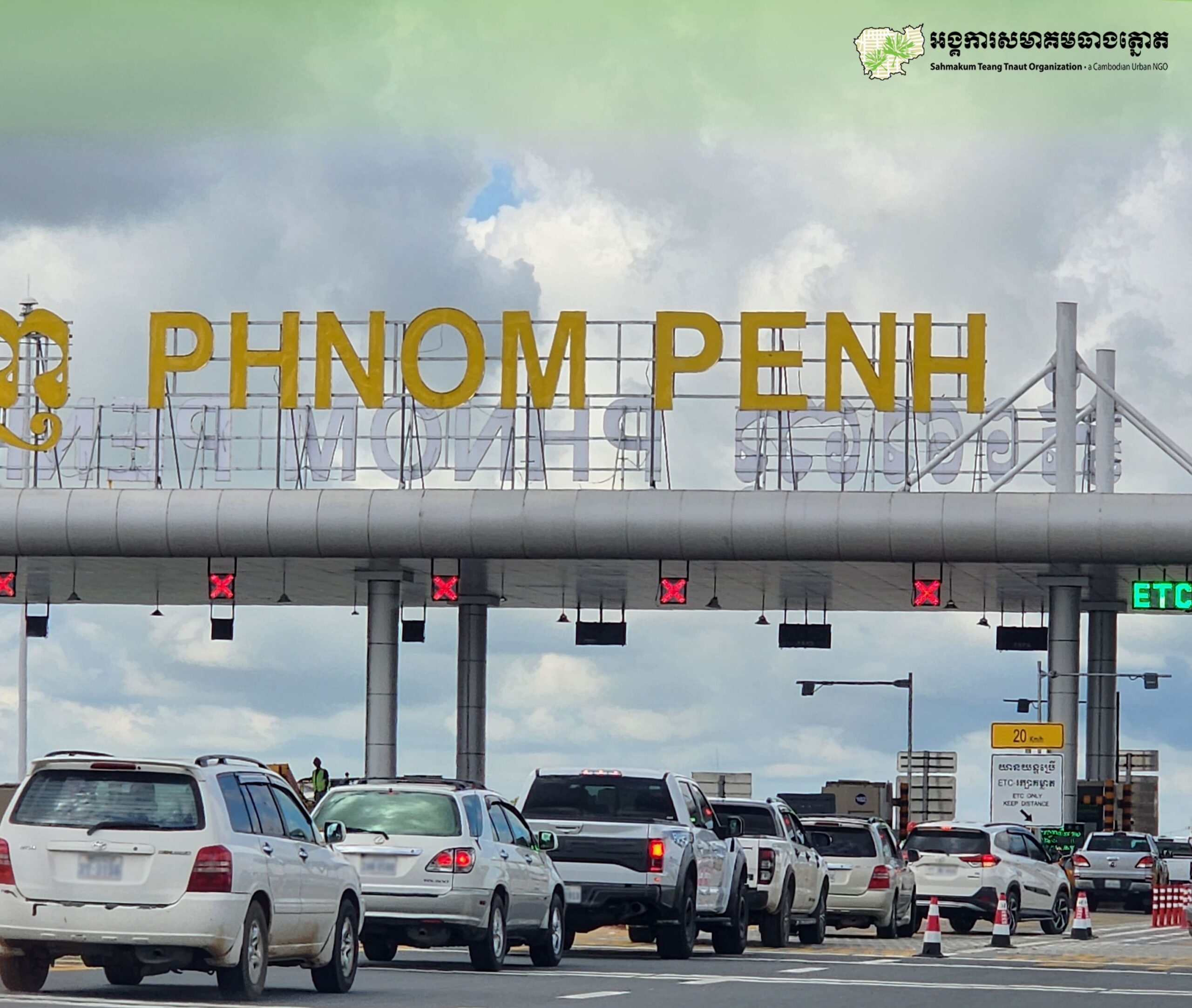
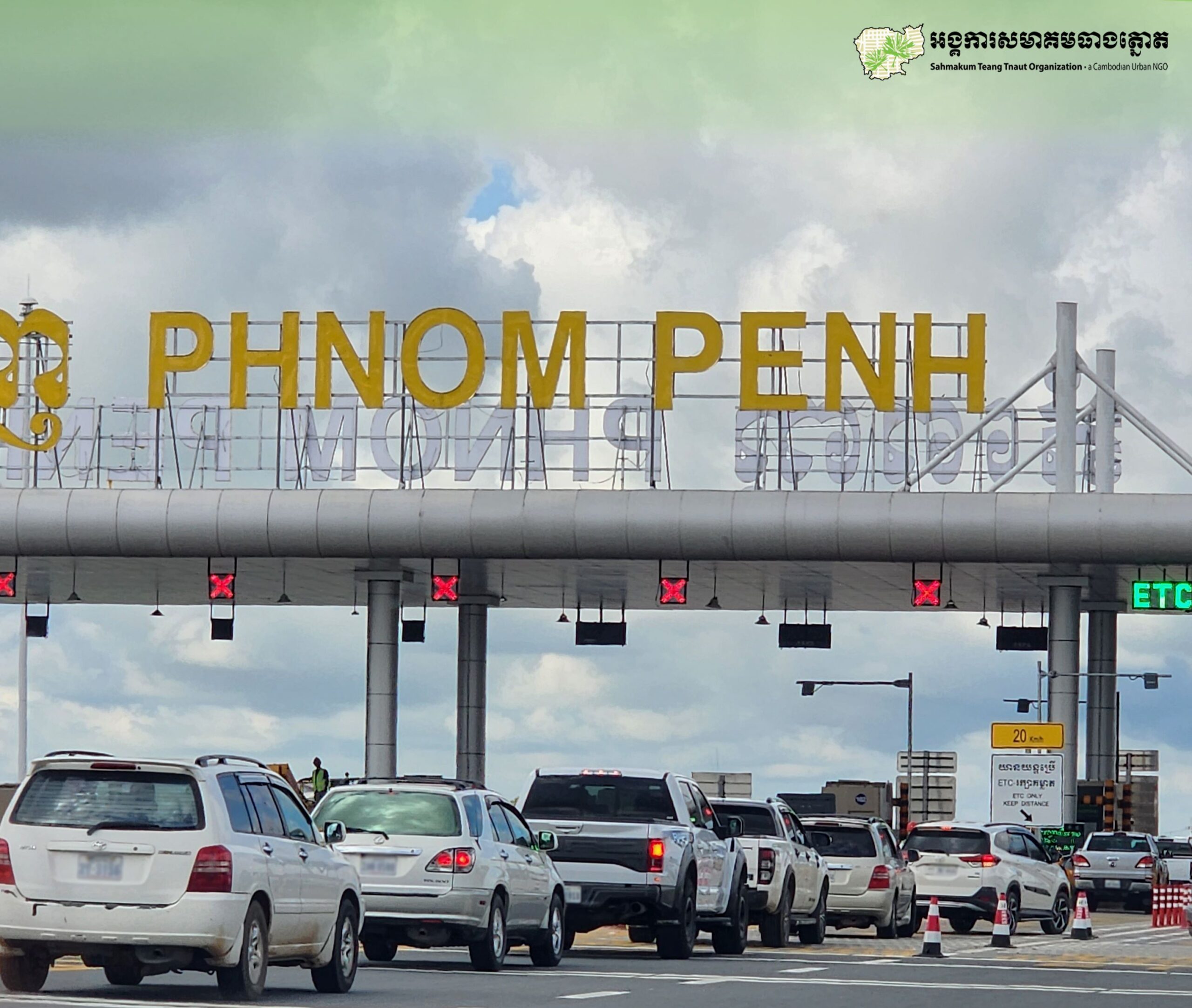
The Phnom Penh-Sihanoukville Expressway, in reality, is an illustration of a development that prioritizes private automobiles as methods of mobility. The project is frequently praised as a triumph for FDI in Cambodia's transportation network. This route is unique in that it saves both money and time by cutting the travel time from Phnom Penh to Sihanoukville in half. and is supported by infrastructure, particularly by those who can afford to buy a car.
There must be adequate evaluation variables, such as safety, sustainability, fiscal effectiveness, and resource use, if the expressway is the best option (a policy suitable to the circumstances of Cambodia) for interprovincial transit. Environmental elements as well as the environment.
Factor of safety
In the first half of 2020, there were 1,619 traffic incidents nationally, resulting in 2,449 injuries and 861 fatalities, according to a study by the Ministry of Public Works and Transport. Both the number of traffic accidents and the number of fatalities dropped sharply in 2021-the year of the COVID-19 epidemic—but they increased in the first half of 2022. 1,609 instances, with 2.235 injuries and 942 fatalities. In the first half of 2023, there were 1,548 more traffic incidents countrywide, which led to 2,072 injuries and 756 fatalities. The National Committee for Road Safety and the United Nations Development Programme (UNDP) in Cambodia estimate that the cost of traffic accidents in Cambodia in 2019 was $466.8 million, or 1.7% of total costs. of the yearly GDP (gross domestic product) receipts. Motorcyclists and residents of underprivileged areas make up more than three-quarters of the victims.
Rather of taking a private vehicle, taking the train is a safer option. In the United States, for instance, driving a private vehicle is the riskiest mode of transportation due to the intricate network of interstate roads. When comparing private passenger automobiles to buses and passenger trains, the death rate per 100 million kilometers was 20 times higher in the former case between 2011 and 2021.
As a result, Cambodia ought to cease blaming just reckless driving and a dearth of enforcement tools (fines). In order to tackle this issue, officials must acknowledge that increased driving, poorly designed roads that fail to safeguard vulnerable road users, and a dearth of alternate modes of transportation are the primary causes of increased accident rates. Drive your own car.
Apart from traffic accidents, there are other public health concerns that are often disregarded, all of which have a connection to using automobiles for transportation. A recent study indicates that there is a higher chance of developing diseases caused by excessive air pollution from heavy traffic while living close to highways. Many settlements along the highway, national routes, and other important transportation corridors may experience negative health effects as a result of these effects. Furthermore, tiny plastic fragments from tires that shatter and enter the water system on a daily basis (a phenomenon known as microplastic contamination) can pose a major risk to everyone's health.
The least economical and resource-efficient method.
The method that uses the fewest resources and money Policies that focus only on improving vehicle traffic will not work because of space-wasting, vehicle-focused infrastructure, and budgetary constraints. In the first full year of operation, 4,679,22 cars passed via the Phnom Penh-Sihanoukville Expressway, according to the Ministry of Public Works and Transport. We ought to contrast it with high-speed trains in order to assess its suitability as a viable substitute for travel throughout the provinces.
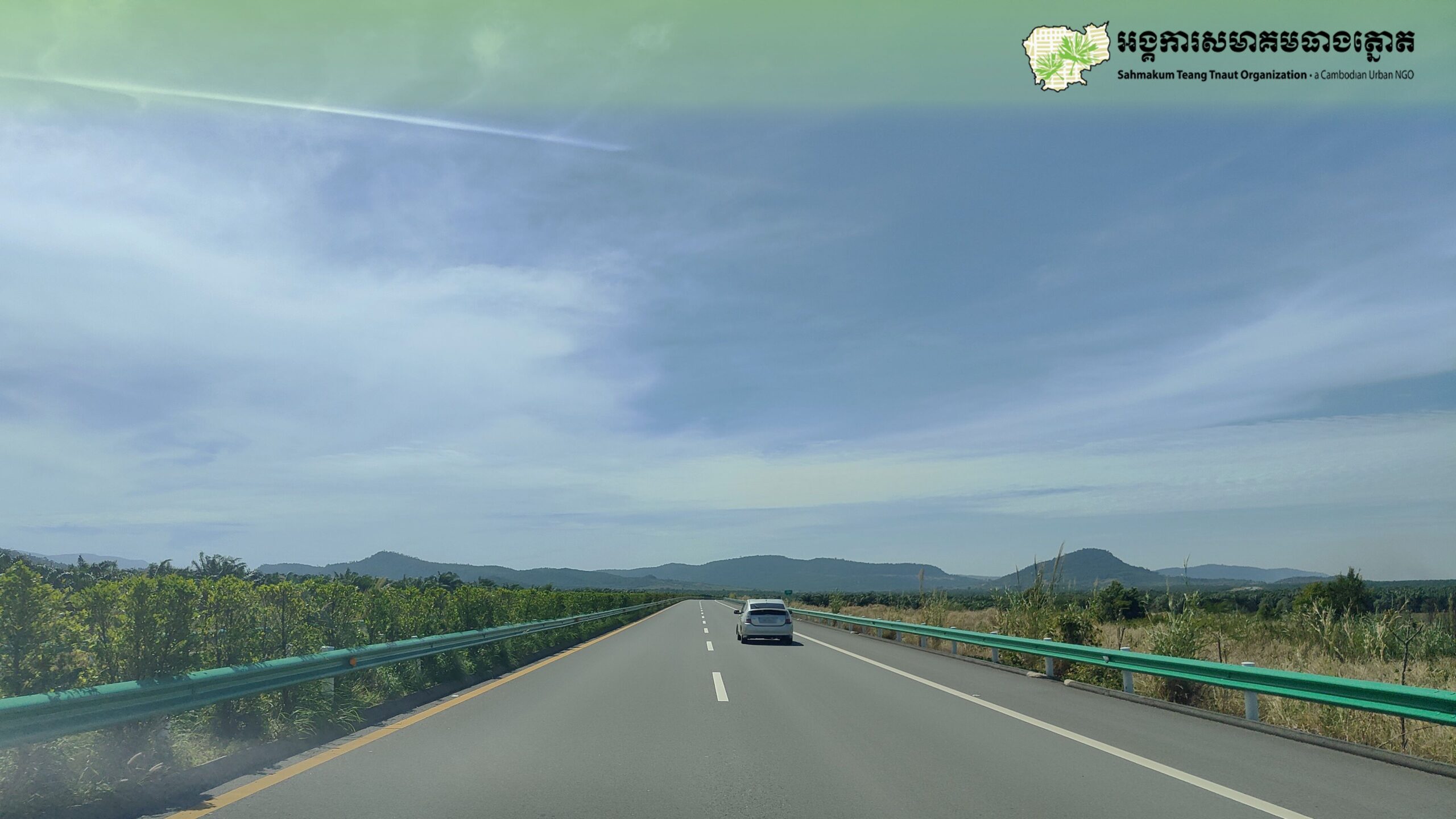
There are 1,300 seats available on Japan's 16-seat Shinkansen train. By train, the average yearly passenger count on the expressway can be 14,398 times a year, or just 39 times a day, assuming that each vehicle can accommodate four people. Consequently, there is a considerable reduction in pollutants, erosion, and infrastructure damage. Managing the increasing demand on highways may provide a challenge. He made the observation that if a road was extended further, people would utilize it more and more in accordance with Braes' theories.
Indeed, between 1980 and 1990, economists examining the supply and demand for roads in the US discovered a positive correlation between the two. This implies that a 10% increase in the road corresponds to a 10% increase in driving. Another example of this is the heavily trafficked Katy Freeway in Texas. At a cost of $2.8 billion, Texas widened the highway to 23 lanes in 2008. This tactic has quickly materialized and is effective in resolving traffic issues. On the other hand, over time, traffic congestion is getting worse. The data from 2011 to 2015 shows that the morning travel time after the extension rose by 25 minutes (or 30%) and the afternoon travel time increased by 23 minutes (or 55% compared to before the road's enlargement).
Furthermore, the four expressways are less efficient than high-speed trains in terms of space costs, in addition to being less passenger friendly. 50 meters must be the width of the freeway. This is twice as big as the high-speed rail, which is 20 meters. This is crucial since the requirement for compact spaces helps prevent and minimize the need to evacuate neighboring people while also having less of an adverse effect on the environment. Small areas are necessary in order to reduce the negative effects on local communities (evictions, displacement, loss of livelihoods, etc.) and to save money on construction and upkeep.
The least environmentally friendly choice is driving a car.
A transport system that is exclusively vehicle-based means that those who are unable to driving cannot get anywhere on their own. Drivers must be at least eighteen years old, pass a driving exam, be in excellent bodily and mental health, and have good vision in order to be eligible to operate a motor vehicle. These restrictions, however, do not apply to those who are physically or mentally ill, young children, the elderly, those without access to driving instruction, those who are unable to pay for auto insurance, and others.
Even if new laws have made it more permissible for those with physical disabilities to drive, they still only address the outward signs of an uneven infrastructure-not the underlying causes. Rather, it makes driving more difficult and puts vulnerable people at risk.
From an equitable perspective, many people's mobility is being restricted by the transportation system, which is centered around the usage of private vehicles. Consequently, it is evident that a policy that depends only on private automobiles is not a cost-effective and secure mode of transportation for Cambodia.
The solution
The fix to encourage efficient and prompt citizen mobilization, national authorities should implement two policies in the near future. Since motorbikes and tricycles are the primary modes of mobility for rural villages, the first policy asks for the construction of a local road network for their exclusive use. To maintain safety, these roads should connect to many locations and be as brief as feasible, prohibiting the use of large vehicles. With the addition of gates and smaller entries, larger cars can be kept outside of these lanes for storage.
In accordance with the second program, significant provincial cities must establish public transportation networks. On the residents of the provincial towns, even a simple system consisting of a few lines might be highly beneficial. Since certain provinces do not yet experience severe traffic, the public transportation system in those larger cities is more efficient than it is in Phnom Penh. This approach may be even more advantageous because fewer individuals in these cities owns private vehicles.
By doing this, residents of the provinces will be more likely to develop the habit of using public transportation on time and become less dependent on their private vehicles. Passenger rail should be given priority by policymakers for interprovincial transit in the long term. As was already indicated, this approach has several benefits over personal vehicle-focused coverage. Specifically, Cambodia can learn from the experiences of neighboring nations like China, South Korea, Japan, and China. Even Thailand, which has long prioritized private automobiles as the primary mode of transportation, has changed its policy to prioritize train for internal travel.
Legislators frequently turn to private automobiles as a solution to transportation and traffic issues. Transportation planning aims to promote human movement by adhering to safety, economic sustainability, efficient use of resources, and environmental issues. This is because estimating the effectiveness of the transport solution by calculating simply the complete vehicle flow might be confusing.
This short research article presents the viewpoints of young researchers on the aspect of development under the theme:
“Infrastructure investment and development: policies centered on cars are wasteful government budgetary expending”
*Please note that this is not an in-depth researched article and does not reflect the point of view of the Samhakum Teang Tnaut Organization (STT).