 English
 ខ្មែរ
ខ្មែរ
Eviction and Compensation in the Reaksmey Samaki Community
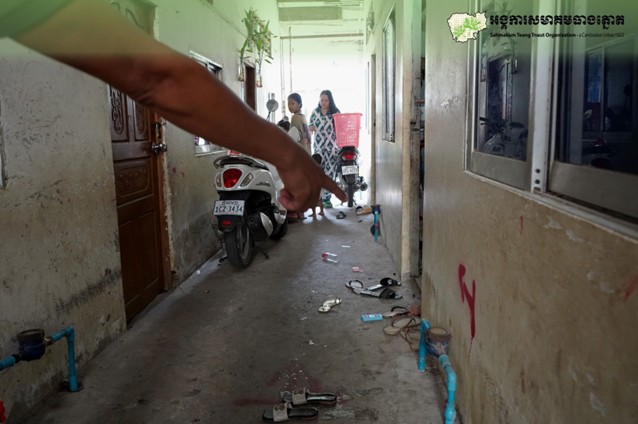
Mr. Then, 49 years old, is a Rasmey Samaki community volunteer who is standing in front of his home. Uncle is standing there, contemplating his home and the life he has created with his family. Soon, he will leave this place. Mr. Then and the entire Reaksmey Samaki village have been devastated by news of eviction. Mr. Then explained his emotions: “I recall thinking a lot when I initially learned about the development project. Will an appropriate amount of money be accepted? I know I will lose a lot of time with my business, and eventually, my house. Will compensation be sufficient to begin a new life with my family?”
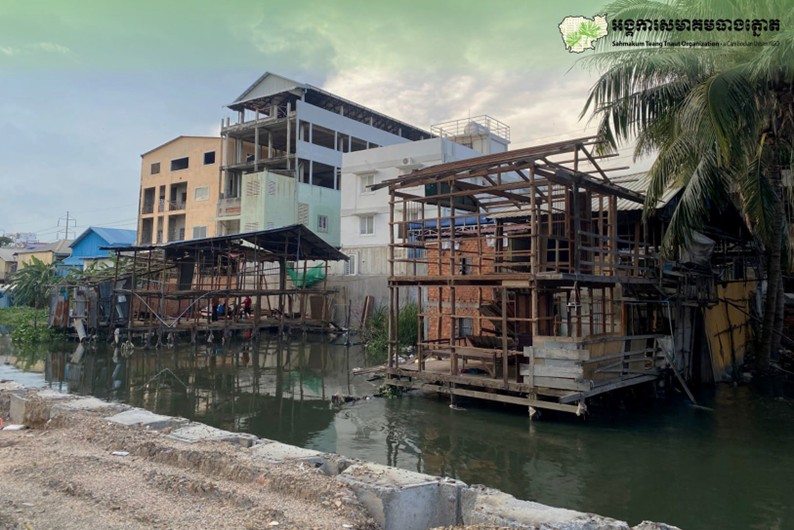
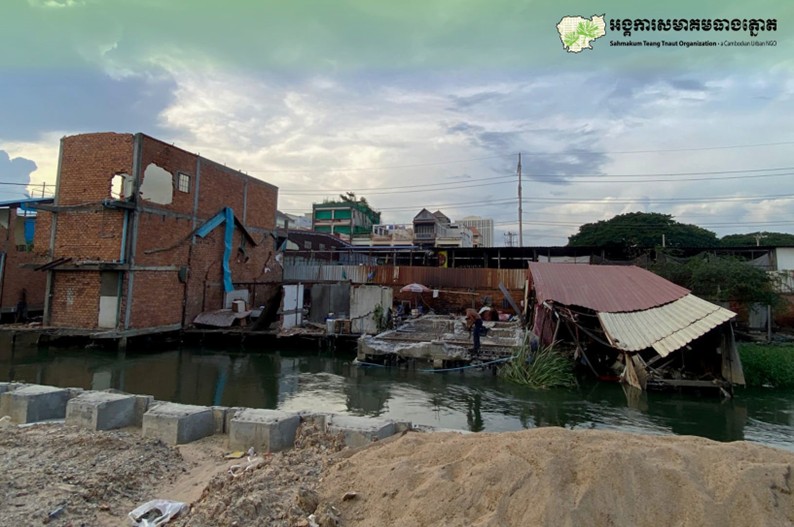
Reaksmey Samaki Community is in Russey 1 Village, Sangkat Steung Meanchey 2, Khan Meanchey, Phnom Penh. This hamlet is very susceptible to flooding – when it rains a lot. Behind the community house, a canal often overflows into our neighborhood, which lacks sewer infrastructure. Heavy rainfall reliably brings flooding to the area within one to two hours.
The Reaksmey Samaki Community's Capital Hall Canal Rehabilitation Development Project aims to alleviate flooding in Phnom Penh, one of 50 such projects. This briefing paper focuses on ensuring fair compensation for evictions and prioritizing the community's livelihood and well-being amidst development
Eviction and Compensation in the Reaksmey Samaki Community.
The Stung Meanchey 2 sewer restoration project was announced in March 2024, according to Mr. Then, a community leader. The residents living along the canal were encouraged to relocate to other places, with the government promising to compensate them in cash based on the type of house they owned. However, in April 2024, a private company hired by the government came to measure the area and compensated the community in September and did not offer any negotiation nor discussion with the community.
Mr. Then and Mr. Sophal, who lived in the Ramsey Samaki community since the 2000s, expressed dissatisfaction with the compensation. While the government pays market rate per square foot, they feel this doesn't account for the full loss the community will experience. The money is enough to buy land, but not to build a new home. They want the government to provide replacement land or a viable alternative.
The current compensation approach has left communities divided and uncertain about their future. Mr. Then and Mr. Sophal want the government to better consider the true needs and wellbeing of the people its development projects will displace.
Mr. Sophal, 60, who has lived in the Ramsey Samaki community since the 2000s, also expressed dissatisfaction with the compensation. Sophal told STT: "The government only pays for the houses, not the land. If they want us to move, they should find us new land in exchange. Then we'll get both a house and land."
Consequences of Eviction
The Reaksmey Samaki community, once vibrant, has grown quiet as some members have already relocated. Mr. Sophal, who remains, fears the community may dissolve: "Because we are already separated. Some went to rent a house, some bought land, and others went to the suburbs."
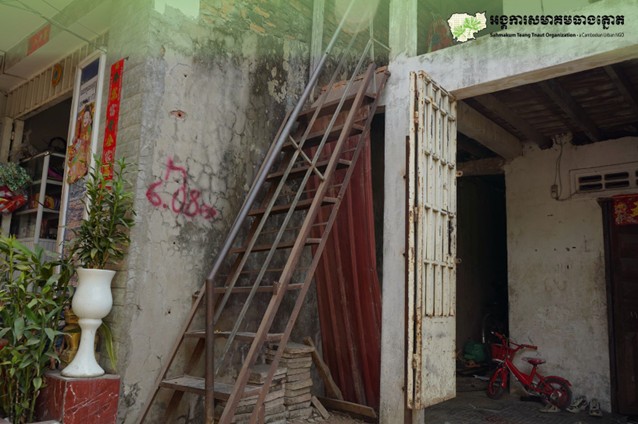
Mr. Then, who relocated after losing his land, expressed the emotional toll: "My heart aches... I’m feeling as though we've emotionally 'run out of gas.' The funds I used to purchase land and build a house... It's impossible to feel at home, anymore. We’ve waited till we could make a living before losing everything. Because we are impoverished, nobody is aware of how many days, months, or years it took to get to this point."
The eviction has also had economic consequences. Both Mr. Then and Mr. Sophal will lose their income sources, which were their kitchens. Mr. Then noted, "Everyday jobs are not simple to find... And there are no other vocations..."
Mr. Sophal, a Tuk Tuk driver with rental rooms, shared how the project impacted his income: "We had to close six rooms that we now had to give away to the government. We would have made $200 monthly from those rooms. That's a big loss."
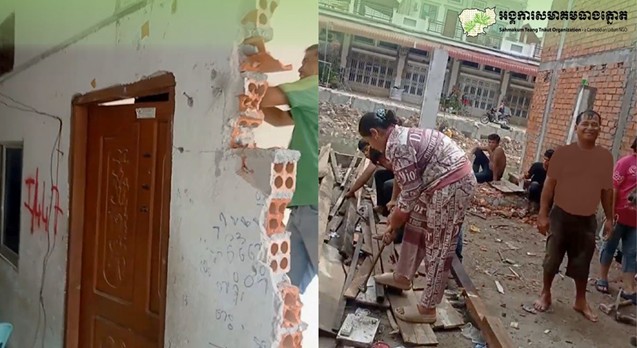
The stories of Mr. Then and Mr. Sophal highlight the negative impacts of inadequate compensation from urban development projects that disregard community concerns and needs. The eviction process and poor compensation options for the Ramsey Samaki community underscore the disconnect between the community's needs and the actions of the Royal Government.
Conclusion
The experiences of Mr. Then and Mr. Sophal highlight the need for urban development projects that balance infrastructure growth with social justice. These initiatives must address the real-life impacts on people's livelihoods and wellbeing, beyond just economic factors.
The Royal Government should ensure that when communities are relocated for development, they do not suffer socially or economically. The government must guarantee that the community can thrive in their new location.
Mr. Then, now living in a rented home, simply asks that the government provide fair and sufficient compensation so the community can relocate without worry.
To support Mr. Sophal and the remaining community, he requests the government build a road along the canal, clean the trash from the canal, and provide a land plan as agreed upon in the initial district meeting. These actions would benefit the residents who have stayed in the Reaksmey Samaki community.