 English
 ខ្មែរ
ខ្មែរ
Poverty, Debt, and Economic Vulnerability Among the Elderly in Cambodia
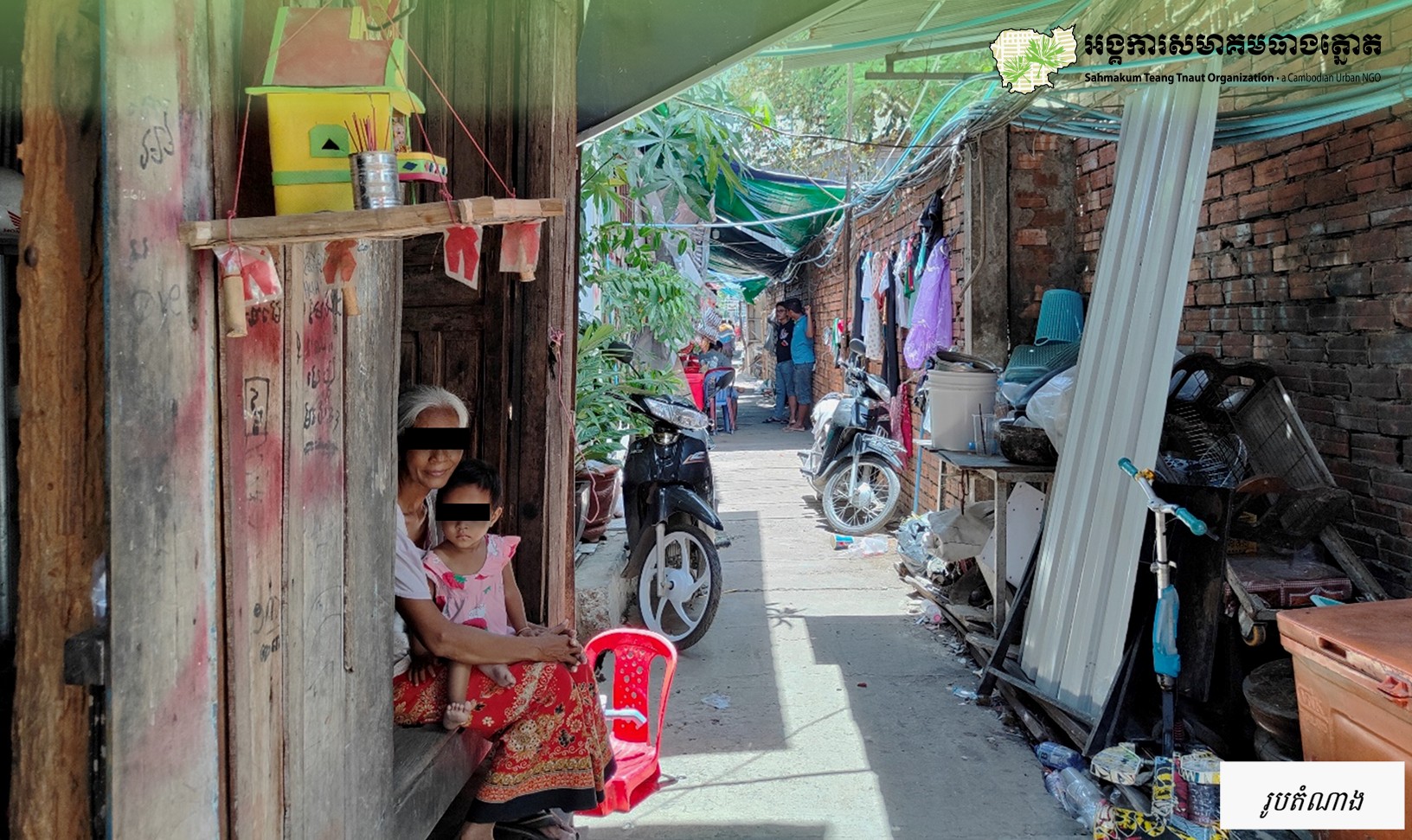
"I would like some assistance with my health because I'm worried about what might happen to my grandson in the event that I become unwell," stated Ot Bo, 61, who is the grandmother of two grandkids.
The majority of the work involved in providing daily care for her grandchildren falls on Grandma Ot Bo. They leave their grandma to look after their two grandchildren-one is the son of their father, and the other is the daughter of their father-while they go to work somewhere else. Grandma Bo had a heart attack twenty years ago, and she has had high blood pressure ever since. She still has a responsibility to take care of her grandkids, though.
Despite facing personal health issues, there are innumerable instances of elderly individuals in Cambodia demonstrating selfless sacrifice by taking care of their grandkids. In nearly two thirds of all households in Cambodia, grandparents serve as the primary caregivers, with 99% of them being women, according to a 2019 research report by the International Organization for Migration (IOM).
The economic fragility of senior people in Phnom Penh's impoverished communities is an increasing issue for older people in Cambodia, in addition to the fact that their loyalty to family members is disregarded. The elderly people in Cambodia are also vulnerable because of their poverty and debt.
Debt and Economic Vulnerability
Financial Vulnerabilities and Debt due to unemployment and insufficient social protection for the elderly, elderly people in Cambodia are frequently at risk of being economically vulnerable.
According to the International Labor Organization's (ILO) 2017-19 World Social Protection Report, only 3.2% of Cambodians who are older than the legal retirement age receives an elderly pension.
Additionally, the pension system and lack of income sources force them into financial fragility, particularly when it comes to everyday expenses, health care bills, and other necessities.
"The income is something that he cannot earn," stated Ou Vanda, 67, president of the Cambodian Elderly Network, in an interview with VOA Khmer. The first crucial point. It also has an impact on the health of the elderly. He suffers from numerous non-communicable diseases, like diabetes, high blood pressure, and arthritis, which are challenging and call for long-term or lifetime care.
According to a National Institute of Social Affairs study, income poverty was the top worry of the older people surveyed. According to the report, a significant portion of the elderly population does not have a source of income of their own and so depends largely on their children for support. Furthermore, their inability to afford healthcare from nearby hospitals or institutes is frequently a barrier to their access to such services.
Furthermore, women with impairments and elderly individuals residing in households with substandard housing or minimal family assistance are more susceptible to financial difficulties.
In Tuol Sangke commune, Russey Keo district, Phnom Penh, for instance, Ms. Wai Yi, a widow and disabled person, complained to VOA Khmer about the difficulty of getting work, saying that if the poor are okay, hire them; they do not take it; they do not know what to do! We used to peel the garlic for them, but these days they refuse it.
The pension system and lack of work possibilities have made Cambodia's elderly economically vulnerable, which has resulted in increased debt-a double-edged sword for the country's aging population.
Poverty and Debt
The combination of high interest rates and unfavorable payment terms has created a debt trap that is endangering the economy of Cambodia's elderly population and prolonging the country's poverty cycle.
Loan for medical expenses is a popular way for families in nations like Cambodia, where social security for the elderly is either nonexistent or severely restricted. High interest rates on loans might push these families into bankruptcy and raise their medical expenses.
For instance, the Cambodian Children's Fund reported that 80 percent or more of the families relocating to the Stung Meanchey dump on the outskirts of Phnom Penh had high debt levels, with interest rates ranging from 10 to 20 percent. each month. Approximately two thirds of families with debt take out loans to cover their medical expenses.
A different study that used a nationwide survey of 5,000 households in Cambodia discovered a correlation between household poverty and economic vulnerability, i.e., that poorer households were more likely to take out loans and accumulate debt. incapable of paying back debt.
Kong Srey, a 65-year-old construction worker and former Samrong Tbong villager, told CamboJa she was content with her salary despite it being low since she had to pay off her debts, saying she had no time to worry about her health. Two million or more riel. The $500 the government offered her for her relocation was insufficient, so she took out a loan to transfer her things from Samrong Tbong village to Tuol village.
Conclusion
The older population in Cambodia is particularly vulnerable due to poverty, debt, and economic instability. Poverty, lack of access to healthcare, and insufficient social safety nets are some of the variables that impact these difficulties. Several policy options are taken into consideration in order to solve the associated problems of economic vulnerability, debt, and poverty among the senior population in Cambodia.
Social protection policy: Improving access to social assistance programs and cash transfers for emergency aid are just two ways that strengthening social protection policy can help vulnerable older adults receive support and assistance. To the household.
Increasing elderly patients' access to healthcare is essential to addressing their health vulnerabilities. The implementation of focused health care programs for the elderly, hiring more medical experts, and making investments in health care infrastructure can all help achieve this.
Employment and income opportunities: Giving the elderly access to the workforce can help lower their risk of poverty and economic vulnerability. Programs like job assistance, self-employment and entrepreneurship support, and training for vocational skills can help accomplish this.
Addressing the issues of economic vulnerability, debt, and poverty among Cambodia's aging population requires cooperation between government agencies, civil society organizations, and foreign partners.
This short research article presents the viewpoints of young researchers on the aspect of development under the theme: “Poverty, Debt, and Economic Vulnerability Among the Elderly in Cambodia”
*Please note that this is not an in-depth researched article and does not reflect the point of view of the Samhakum Teang Tnaut Organization. (STT)